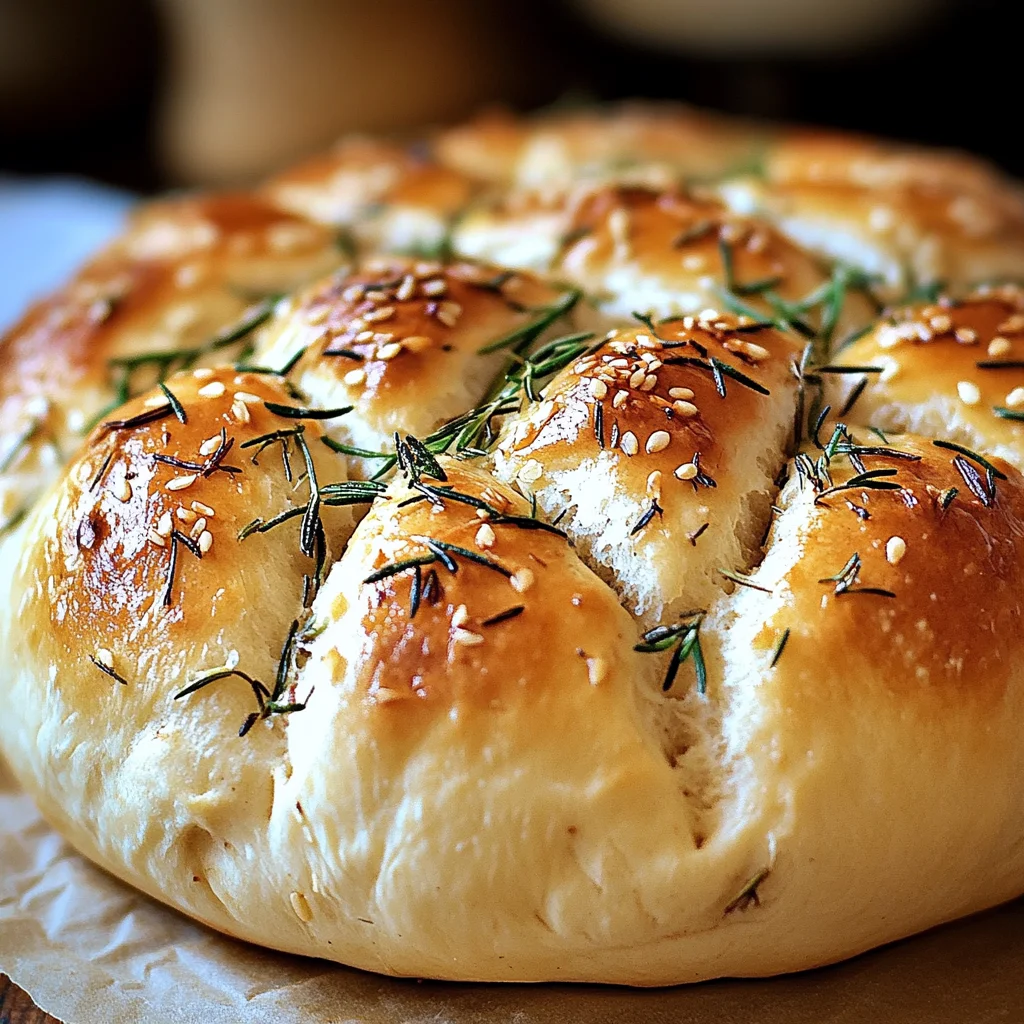
Ingredients
Equipment
Method
- Step 1: Preheat oven to 400°F (204°C). Slice the whole head of garlic in half horizontally. Drizzle the cut sides generously with a portion of the olive oil. Season with coarse sea salt and freshly ground black pepper. Wrap snugly in foil and roast in the preheated oven for about 40 minutes, until soft and fragrant. Let cool slightly, then squeeze out the mashed cloves.
- Step 2: In a small bowl, combine room temperature water and active dry yeast. Stir gently and let sit for 10-15 minutes until foamy. In a large mixing bowl, whisk together flour, kosher or fine sea salt, dried oregano, and finely chopped fresh rosemary. Pour in the foamy yeast mixture, add the mashed roasted garlic, and the remaining olive oil. Mix with a spatula until a sticky, shaggy dough forms; do not knead.
- Step 3: Cover the bowl with a clean kitchen towel and let the dough rise at room temperature for 8-10 hours, or until doubled in size.
- Step 4: Lightly flour a clean work surface. Gently turn the dough out and shape it into a loose ball with floured hands. Place the dough seam-side up into a floured proofing bowl or a regular bowl lined with a floured kitchen towel. Cover and refrigerate for 1-24 hours (up to 48 hours for deeper flavor).
- Step 5: One hour before baking, preheat your oven to 450°F (232°C) with your Dutch oven (with its lid) inside. Carefully remove the dough from the refrigerator and invert it onto a piece of parchment paper (seam-side down). Use a sharp blade to make a score or slash on the top surface of the dough.
- Step 6: Carefully transfer the dough with the parchment paper into the preheated Dutch oven. Cover with the lid and bake for 30 minutes. After 30 minutes, carefully remove the lid and continue baking for an additional 15-20 minutes, or until golden brown and hollow-sounding when tapped.
- Step 7: Carefully remove the bread from the Dutch oven and transfer it to a wire rack to cool completely for at least 1 hour before slicing. Slice and serve immediately.
Notes
Substitutions & Additions: For a quicker option, use 1-2 tablespoons of gently sautéed minced garlic instead of roasted, though roasting yields superior flavor. Replace rosemary with fresh thyme, chives, or a mix of Italian herbs. Experiment with adding ¼ to ½ cup whole wheat flour for a nuttier flavor. Stir in ½ cup shredded Parmesan or Gruyere cheese, or add chopped sun-dried tomatoes, olives, or red pepper flakes for extra flavor.
Tips for Success: Ensure your yeast is active by checking for foam in the water (around 70°F/21°C). Allow ample time for the long rise; it's crucial for flavor and texture. Resist the urge to knead the dough excessively. The preheated Dutch oven creates essential steam for a crispy crust; if unavailable, use a baking stone with a pan of hot water on the bottom rack for steam. Always cool the bread completely on a wire rack before slicing to prevent a gummy texture.
Storage: Store at room temperature in an airtight container or bread bag for 2-3 days. For a crispier crust, use a paper bag, but it will dry out faster. This bread freezes well: once completely cooled, wrap tightly in plastic wrap, then foil, and freeze for 2-3 months. Thaw at room temperature or warm in the oven/toaster for a 'just baked' feel.
FAQs: Instant yeast can be used by adding directly to dry ingredients (no pre-dissolving), but rise time may be shorter. If dough isn't rising, inactive yeast or incorrect water temperature are common causes. While a Dutch oven is recommended, you can use a baking stone or sheet pan with a pan of hot water for steam. Skipping cold fermentation is possible if in a hurry, but it significantly enhances flavor and complexity.